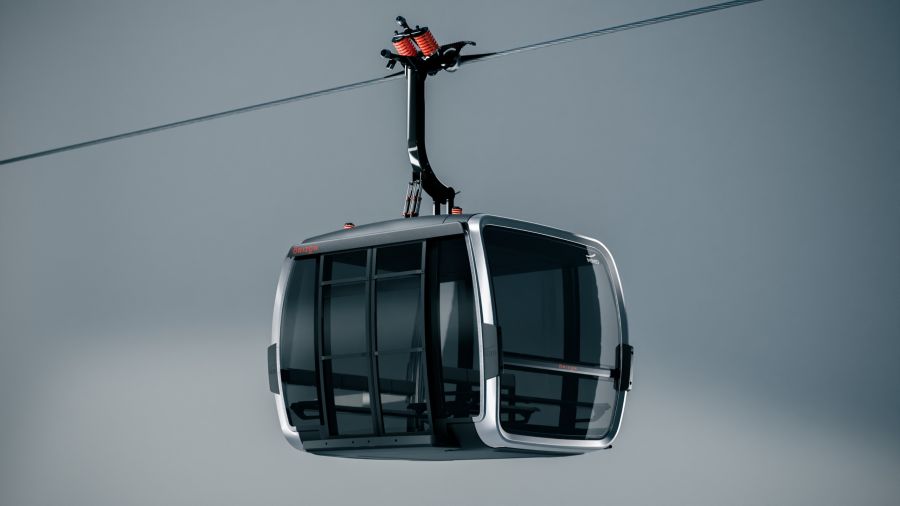
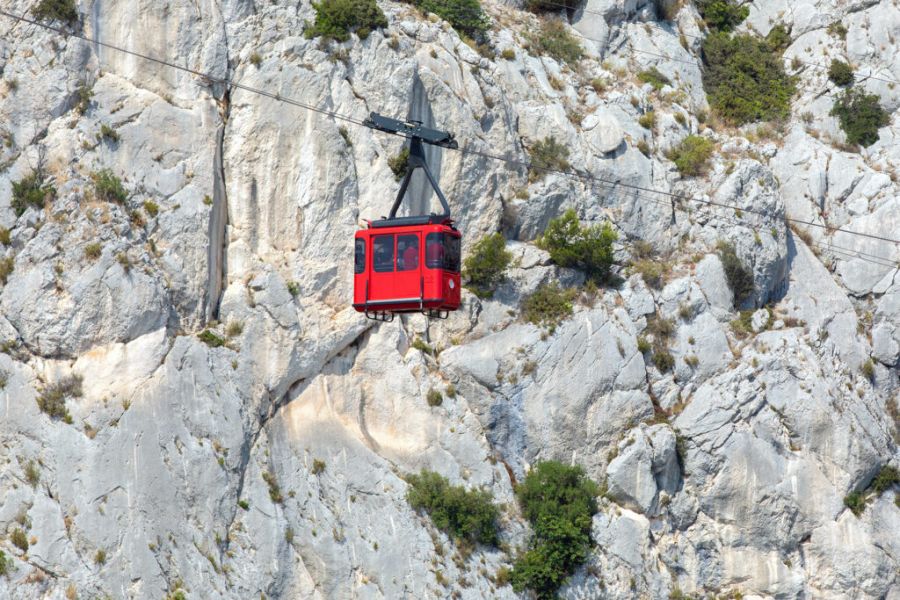
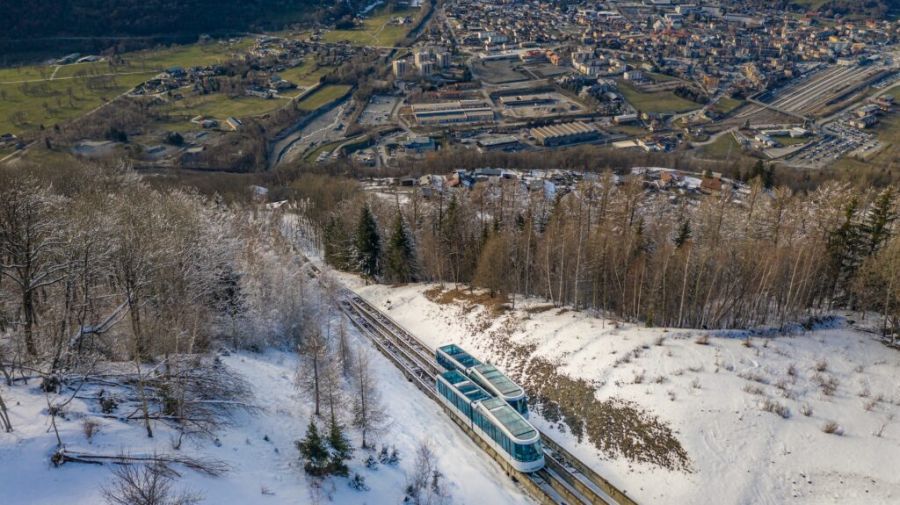
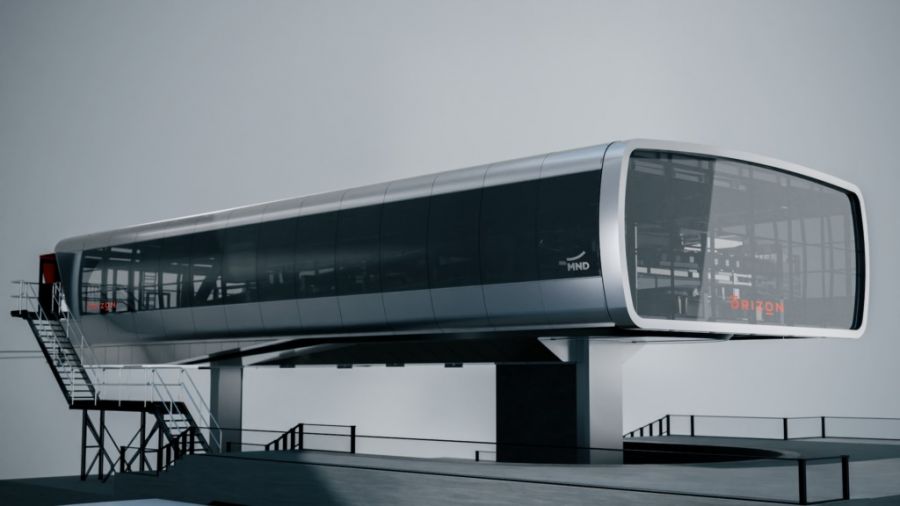
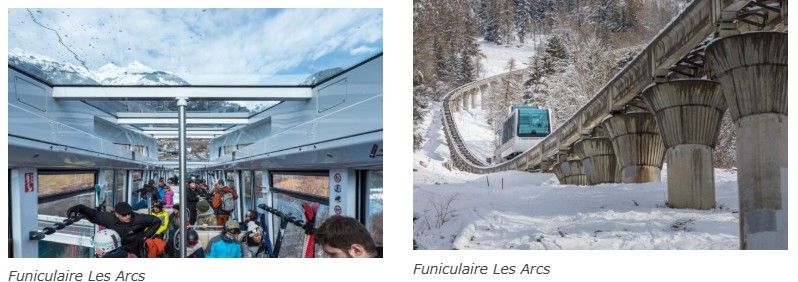
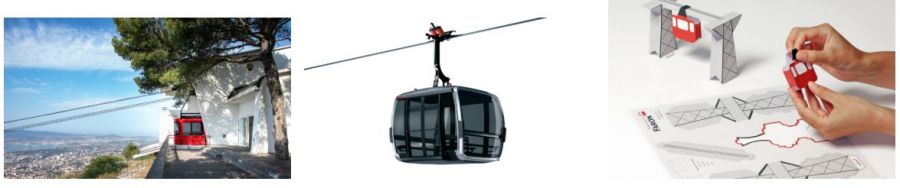
Mountain Planet: Mountains: Design, a New Driver of Cable Mobility in Mountain Regionsfrom Alexandre Bérard In ski areas as well as in valleys, design is still often perceived as an aesthetic “extra,” sometimes even as a luxury. Yet collaborations with cable-lift manufacturers such as POMA, MND, LEITNER, and Doppelmayr show that design can instead become a strategic lever for the passenger experience, for more resource-efficient infrastructure, and for the industrial competitiveness of mountain stakeholders. For its 2026 edition, Mountain Planet is focusing precisely on this role of design in cable mobility, giving a voice to designers and industry players who are already using it as a concrete driver of transformation in mountain environments. Long confined to the appearance of cabins or stations, design is now at the heart of reflections on mountain infrastructure: climate adaptation, multi-season use, new practices, perceived quality, and durability. Projects carried out by POMA for the Mont Faron cable car and the Bourg-Saint-Maurice–Les Arcs funicular, as well as MND’s ORIZON gondola range, illustrate this shift toward cable transport systems conceived simultaneously as technical objects, experiential platforms, and symbols of transition. Whether in urban cable mobility, station-to-valley connections, or ski lifts, design studios involved in these projects—Atelier Patrick Jouffret and Stellantis Design Studio—note that design remains underexploited in mountain environments. Just as trams have become urban icons, gondola cabins and funiculars could more strongly express the identity of territories, encourage modal shifts toward sustainable mobility, and embody a more restrained approach to spatial planning. The next turning point will not come from ever more spectacular forms, but from modularity, recyclability, and appropriateness of use. Evolving structures, removable seating to accommodate bicycles in summer, natural ventilation instead of air conditioning, and the use of durable materials: design becomes a concrete way to adapt infrastructure to shorter winters, two- or four-season use, new mobility patterns, and increasing pressure on resources. Design as a Driver of Experience and Landscape For the Mont Faron cable car in Toulon, industrial designer Patrick Jouffret and his team chose to preserve the historic red cabin while completely rethinking its interior. The glazed surface was significantly increased, polycarbonate was replaced with glass, a floor porthole was added, and great care was taken with finishes. The ascent was transformed into a moment of wonder overlooking the bay and the landscape—so much so that the cable car itself has become an attraction. The result: the installation regained its status as a local icon, and visitor numbers quadrupled after modernization. On the Bourg-Saint-Maurice – Les Arcs funicular in Savoie, the same approach guided the creation of a glazed roof conceived as a belvedere over the mountains. It emerged from in-situ immersion and a design process focused on panoramic vision rather than formal gestures. The Atelier Patrick Jouffret redesigned the system starting from a simple observation: “the real spectacle is the mountains—above and behind the passengers!” The glazed roof and volumes, inspired by the belvederes of designer Charlotte Perriand, open up views and space, transforming a constrained transport journey into a truly immersive travel experience in the landscape. The driver’s cabin, interior modularity (seating, bike spaces), and extensive use of glass are conceived as part of a global design project where user experience, circulation on board, and product durability take precedence over pure styling. When Product Design Meets Industrial Design With its ORIZON gondola and chairlift program, MND commissioned Stellantis Design Studio to develop a new generation of an ecosystem composed of cabins, stations, and lifts, conceived from the outset as a complete product system: exterior design, interior architecture, perceived quality, industrial processes, and communication. With ORIZON, the world of gondola lifts takes a qualitative leap. The cabin is conceived as a “unique window to the world,” offering one of the best panoramic views on the market thanks to an optimized structure designed to maximize glazing inside and out. The ORIZON identity—name, logo, and graphic language—extends this concept of openness to the landscape. At the same time, the cabin behaves like a blank canvas, allowing operators of ski resorts or tourist sites to project their own identity through colors and graphics. Teams from Stellantis Design Studio worked in several phases: defining uses and context international creative exploration detailed development They relied on the automotive expertise of Stellantis (fit and finish, tolerances, manufacturing technologies) as well as the engineering expertise of MND. Design also served as a bridge toward new industrial solutions, including materials, weaving, assembly, and forming processes. “Thanks to its innovative and experiential design, we believe ORIZON will offer future customers a unique perspective on our precious natural and built environments.” — Hugo Nightingale, Global Creative Director, Stellantis Design Studio Sobriety, Modularity, Sustainability: Design as a Response to Climate Challenges For Patrick Jouffret, mountain design is entering a new era—one defined by sobriety, modularity, and recyclability, rather than large, rigid composite shells. His approach consists of “disassembling” the object in order to design evolving structures capable of adapting to multi-season use (winter/summer), climate variations, and future operating scenarios, using less material, natural ventilation systems, and assemblies designed for disassembly and recycling. At Stellantis Design Studio, design goes beyond form and integrates industrial robustness, top-level perceived quality, and design-to-cost principles. By transferring technologies and expertise from the automotive industry—such as metal forming, precision tolerances between parts, or seat design—designers helped simplify the manufacturing of the ORIZON cabin, improve its quality, and ensure faithful execution of the initial design intent, while remaining aligned with the energy-efficient single-cabin/single-motor philosophy developed by MND. From Object to Territory: A Global Vision for Mountain Development Beyond cabins themselves, both studios advocate a vision of design as a global territorial project. For Atelier Patrick Jouffret, successful mountain design must be humble, respectful of landscapes and local history, while proposing renewed experiences: immersive travel, new observation postures, modular uses, and integration with other forms of mobility or year-round activities. The Les Arcs funicular illustrates this approach: an iconic object born from a deep understanding of constraints, uses, and expectations linked to climate change and the evolving needs of mountain regions. At Stellantis Design Studio, the experiential design approach places humans at the center. Design must simultaneously meet the expectations of operators, manufacturers, and end users, reconciling emotion, comfort, safety, and industrial performance. Designers see significant untapped potential in mountain environments beyond cable transport alone: safety equipment, interfaces, signage, waiting areas, and four-season infrastructures could benefit from the same design rigor to create clearer, more inclusive experiences with lower environmental impact. Design, a Partner for the Mountains of Tomorrow Faced with climate constraints, the need for investment sobriety, and the search for new economic models for mountain territories, design appears increasingly as a strategic lever rather than a superficial aesthetic layer. By bringing a transversal vision that connects engineering, uses, economics, and landscape, designers can help public and private stakeholders conceive more adaptable, desirable, and sustainable infrastructures—whether cable lifts, urban cable mobility systems, safety equipment, or four-season leisure infrastructures. By integrating design into their projects, manufacturers demonstrate that design is already playing a key role in transforming cable transport mobility. From the iconic Mont Faron cabin to the new ORIZON system, these projects show that a well-designed cable transport system can enhance user experience, optimize industrial tools, and support the climate transition in mountain regions. |
|

ropeways.net | Home | Ropeways | 2026-03-20
 Back
Back Add Photos
 Print
PrintMore articles:
The Storm Skiing Journal: Podcast Waterville Valley President & GM Tim Smith
2026-03-30
Google Adsense