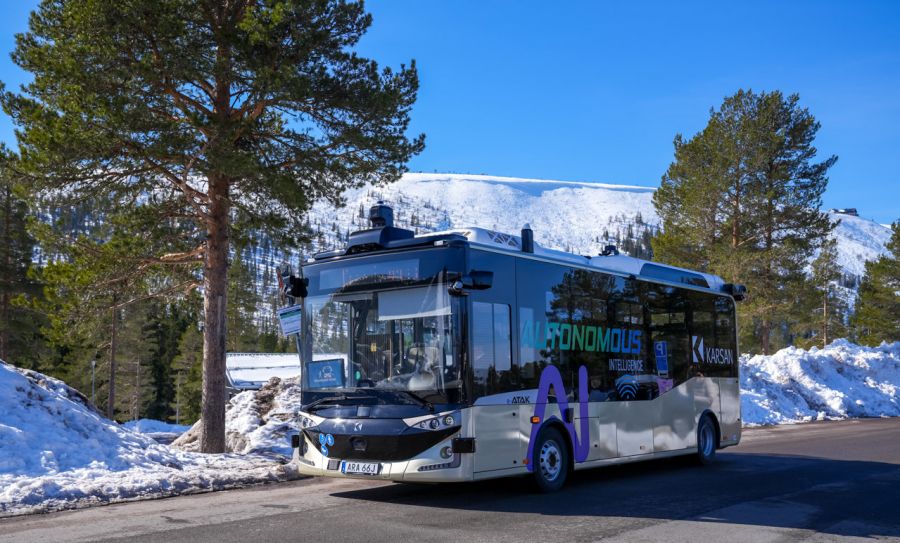
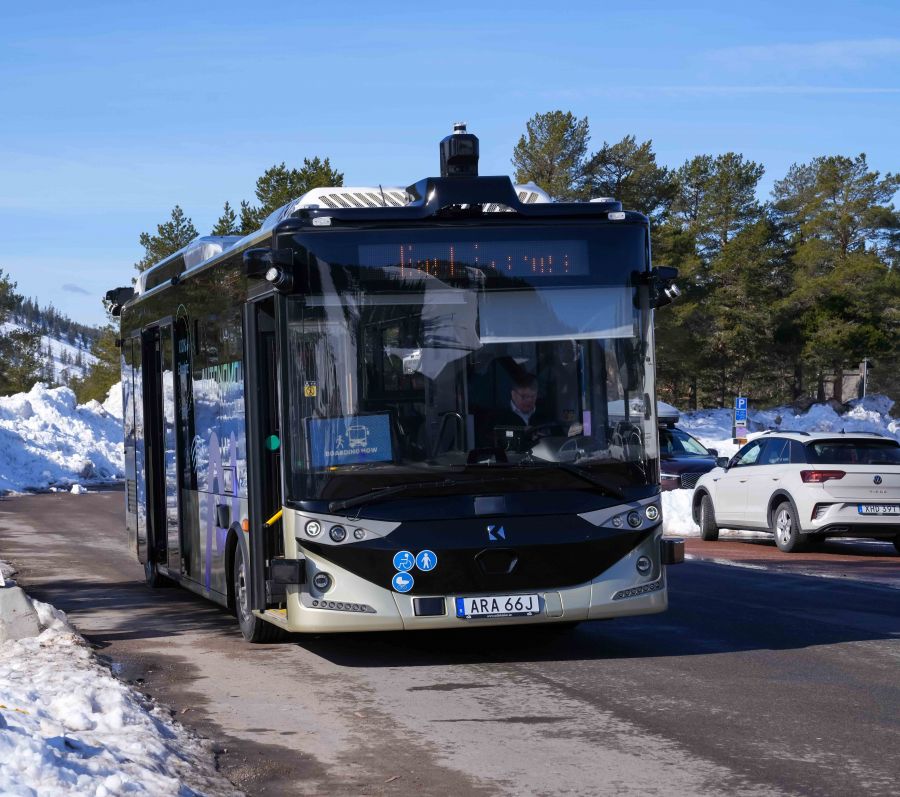
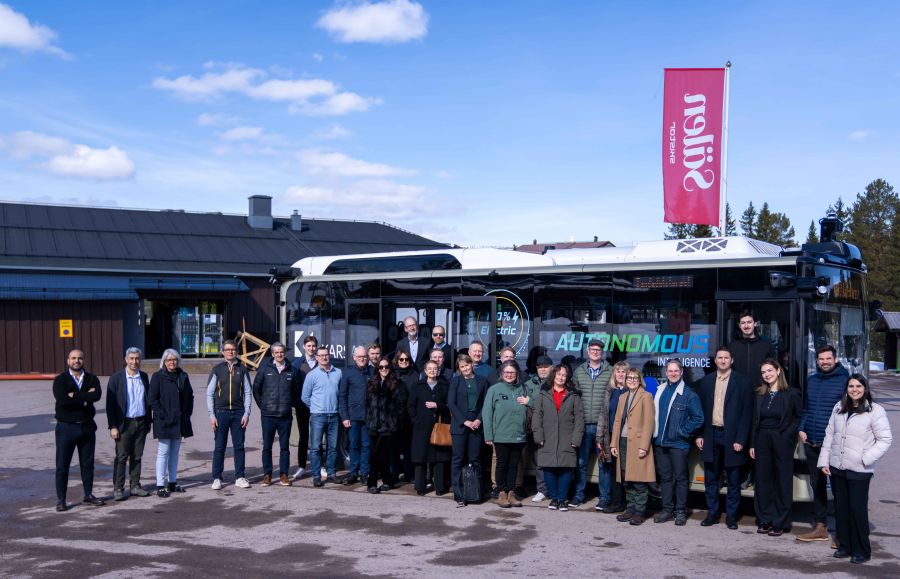
Karsan Autonomous e-ATAK Carried Tourists to Ski Resorts in Sweden!Karsan Autonomous e-ATAK Became One of the First Autonomous Public Transportation Applications in Ski Tourism! With its vision of “One Step Ahead in the Future of Mobility,” Karsan, a pioneer in the global transition of public transportation to electric and autonomous vehicles has successfully achieved yet another first with Karsan Autonomous e-ATAK. As part of the Sälen–Idre Autonomous Public Transportation Project (SIKTA), conducted in collaboration with the municipalities of Malung-Sälen and Älvdalen in Sweden, local businesses, and Dalarna University, the Karsan Autonomous e-ATAK became one of the first autonomous bus applications to transport passengers under real-world road conditions in a mountainous tourism region. As of January 2026, Autonomous e-ATAK underwent comprehensive testing in traffic and shared-road scenarios involving constant interaction with pedestrians and skiers, as well as heavy snowfall and challenging winter conditions. Following a successful testing phase, it received passenger transport approval from the Swedish Transport Agency (Transportstyrelsen) on March 9, 2026, and entered commercial operation. The vehicle provided safe and uninterrupted service under real-world operational conditions by transporting tourists for approximately one month during the peak ski tourism season. Operating on a 4.8-kilometer route as part of the project, Autonomous e-ATAK actively served between ski resort areas and accommodation points, demonstrating not only its technological capabilities but also its contribution to sustainable and inclusive mobility solutions. Karsan CEO Okan Baş, who stated that this application represents one of the most comprehensive implementations of autonomous public transportation vehicles in challenging environments such as mountain and ski tourism, said, “With this project we have launched in Sälen, we have demonstrated that autonomous mobility can operate safely and seamlessly even in winter tourism regions one of the most challenging use cases for autonomous mobility. “This application is strong evidence that autonomous public transportation has moved beyond being a pilot technology and has become an integral part of real life. This new success further solidifies Karsan’s leadership in the field of autonomous mobility,” he said. Sälen application stands out as one of the globally referenced implementations for autonomous public transportation in highly complex environments where harsh weather conditions intersect with intense human interaction. In line with this vision, the SIKTA Autonomous Transport Conference, where the project’s key outcomes were evaluated and Autonomous e-ATAK was tested in the field, was held on April 8, 2026, with broad participation. The event, attended by Malung-Sälen Municipality, representatives from Sälen Buss, Dalarna University, Karsan, Applied Autonomy team, ADASTEC, and international media, served as a significant platform highlighting the project’s success and its robust collaboration model. A robust model for scalable tourism mobility! Sälen–Idre Autonomous Public Transportation Project (SIKTA) stands out as a significant mobility initiative led by the Municipality of Malung-Sälen, in collaboration with the Municipality of Älvdalen, local businesses, and Dalarna University. This initiative, implemented in Sälen, goes beyond being a one-off project; it represents a strong step toward a long-term transformation aimed at expanding autonomous mobility in tourism regions. The operational success achieved demonstrates that autonomous public transportation is a safe, sustainable, and viable solution even under challenging climatic and geographical conditions. In the project’s second phase, the Karsan Autonomous e-ATAK is planned to operate in Idre, another major winter tourism hub in Sweden. In this context, the strong performance outcomes achieved in Sälen are expected to pave the way for broader-scale operations. Commenting on the matter, Karsan CEO Okan Baş stated: “This success we achieved in Sälen demonstrates that autonomous public transportation can rapidly gain traction in various applications, particularly in tourism regions. We believe this model will provide a sustainable and efficient transportation solution for destinations experiencing seasonal peak demand.” There is a strong coalition behind the project! The Sälen–Idre Autonomous Public Transportation Project (SIKTA) stands out as a model mobility project brought to life through strong collaboration between the public sector, academia, and the private sector. Shaped by the active contributions of the municipalities of Malung-Sälen and Älvdalen, Dalarna University, the Applied Autonomy team, ADASTEC, local businesses, Sälen Buss, and destination management organizations, the project serves as an example highlighting the importance of collaboration in the development of autonomous technology. The SIKTA Autonomous Transport Conference, where the project’s outcomes were evaluated and the Karsan Autonomous e-ATAK was tested in the field, was held on April 8, 2026, with broad participation. The event, attended by Malung-Sälen Municipality along with key regional stakeholders, technical teams, and international media representatives, served as a significant platform showcasing the project’s success and the power of collaboration. SIKTA Project Manager Tiina Ohlsson commented on the matter, saying: “The trial demonstrates the potential of autonomous public transport in winter environments and we have already learned enormous amount to both improve the technology and the project’s operational routines.” Malung-Sälen Municipality Mayor Hans Unander, meanwhile, said, “This is a very rewarding collaboration and project with Karsan and ADASTEC. The collaboration means that even those of us who live far from big cities can keep up with the development. We hope that there will be a continuation of the project after the next winter season to be able to realize sustainable transport in the mountain environment. This could be the public transport of the future since it is difficult to recruit bus drivers in Sweden.” ADASTEC CEO Dr. Ali Peker also noted in his assessment, “Sälen marks an important step in testing and proving our technology in a ski resort environment. Building on our experience in winter conditions, this deployment has enabled us to further adapt our system to the specific dynamics of winter tourism. As we continue operations in Idre, we will carry these learnings forward and further expand our experience in similar operational environments.” Our goal for 2026 is to completely remove the safety driver from the system! With this project implemented in Sälen, Karsan has once again clearly demonstrated that its autonomous technology can operate with high performance not only in specific test areas but also under challenging climates and real-world operational conditions. Along with this success, Karsan has also proven its ability to rapidly adapt to different geographies, variable road conditions, and high-usage scenarios in the field. Karsan CEO Okan Baş commented on the matter as follows: “The operational experience we gained in Sälen has accelerated our transition to the next phase of our autonomous mobility roadmap. As Karsan, we aim to implement a fully autonomous operational model where the safety driver is completely removed from the system in the city of Stavanger, Norway, by 2026.” |
|

ropeways.net | Home | Tourism | 2026-04-29
 Back
Back Add Photos
 Print
PrintMore articles:
Sunkid: First 1,200 mm Type-N conveyor belt in Poland
2026-05-16
Sunkid: Mountain Coaster 2.0 in Romanias highest City
2026-05-09
Mount St. Louis Moonstone Invests Over $4.3 Million Ahead of the 2026/27 Season
2026-05-05
Google Adsense